
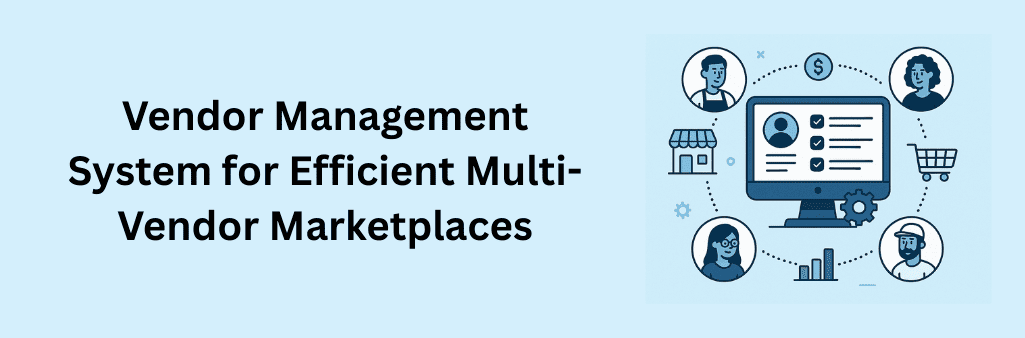
A Vendor Management System (VMS) is no longer optional in the fast-paced digital economy. Online sellers, logistics teams, and retail brands now need smarter ways to handle vendor relationships, warehouse operations, and order processes. A modern VMS integrates with multi-vendor marketplaces, inventory storage systems, and automated inventory management systems to streamline every transaction. Businesses that adopt advanced Multi-Vendor Marketplace software achieve faster scaling, better vendor visibility, and reduced operational costs. By linking vendor inventory management with warehouse inventory management programs, companies simplify procurement, improve delivery accuracy, and enhance customer trust.
A Vendor Management System is vital for running a successful online marketplace. It aligns vendors, customers, and operators into one streamlined workflow. By integrating multi-vendor marketplace platforms with order management system software, businesses achieve faster processing and smoother vendor interactions. A well-structured VMS enhances vendor inventory management, ensuring each seller meets delivery expectations. It also reduces disputes, increases transparency, and provides operators with real-time insights. In modern commerce, a VMS is the bridge that connects suppliers to buyers without friction.
E-commerce is shifting from single-store models to multi-vendor ecommerce platforms. Without a vendor management system, organizations face challenges in tracking vendor performance, stock levels, and compliance. A VMS solves these pain points by creating a unified space for vendor marketplace operations.
This creates a balanced environment where both vendors and marketplace operators grow sustainably.
A well-designed VMS connects to retail inventory management systems and ensures accurate stock visibility across all vendors. By linking vendor software with Warehouse Inventory Management programs, operators reduce duplication and stock-outs.
When combined with multi-cloud management vendors, organizations can centralize inventory across regions, ensuring consistency even in large, global online marketplace platforms.
Automation transforms how businesses manage multiple vendors. An automated vendor management system reduces human error and ensures transactions happen smoothly. Vendors gain dashboards to track their sales, while operators oversee compliance.
These layers of automation ensure that every vendor meets standards, while operators enjoy reduced overheads and better profitability.
A multi-vendor marketplace platform creates opportunities for vendors of all sizes to connect with customers globally. Paired with vendor inventory management, sellers can track performance while improving availability.
Key benefits:
For modern commerce, a VMS is the invisible engine that powers sustainable, scalable growth.
Modern retail cannot function without automation, and a Vendor Management System paired with automated inventory management systems creates a strong backbone. Vendors can track stock in warehouse inventory management programs and sync updates instantly. Automation reduces delays, prevents overselling, and improves customer satisfaction. With tools like a simple inventory management system, even smaller sellers can compete in global multi-vendor ecommerce. When supported by management software for e-commerce, this integration empowers vendors to scale operations efficiently.

Ginkgo Retail is an emerging leader in enabling multi-vendor marketplace software and vendor inventory management solutions. By integrating warehouse inventory management programs with simple inventory management systems, it helps retailers achieve higher efficiency. Its approach to automated inventory management systems ensures businesses gain transparency, scalability, and compliance. Ginkgo Retail empowers vendors with analytics-driven dashboards, making it easier to navigate complex supply chains while maintaining operational simplicity.
A robust vendor management system acts as the backbone of e-commerce ecosystems. It bridges the gap between vendor software, management software for e-commerce, and warehouse inventory management programs. Companies aiming for long-term stability should invest in automated vendor management systems to build competitive online marketplace operations. By leveraging solutions like those offered by Ginkgo Retail, businesses unlock new levels of efficiency, trust, and profitability.
Q1. What is a Vendor Management System in e-commerce?
A VMS is software that manages vendor data, inventory, and compliance for marketplaces.
Q2. How does a Vendor Management System support a multi-vendor marketplace?
It tracks vendor performance, automates workflows, and enhances marketplace control.
Q3. Can Vendor Management Systems integrate with warehouse inventory management?
Yes, they connect directly with warehouse inventory management programs for real-time updates.
Q4. What is the role of automation in a Vendor Management System?
Automation reduces manual errors and integrates payments, compliance, and inventory control.
Q5. How does Ginkgo Retail enhance vendor management systems?
Ginkgo Retail offers automated dashboards and analytics for vendor and inventory management.
Q6. Is a Vendor Management System necessary for multi-vendor ecommerce growth?
Yes, it ensures seamless vendor onboarding, stock visibility, and performance tracking.
Q7. Can small retailers benefit from a Vendor Management System?
Absolutely, even small vendors gain better control with simple inventory management systems.
Q8. How do Vendor Management Systems improve order management?
They sync with order management system software for accurate and timely order processing.

CEO & Founder Ginkgo Retail & Comverse | Serial Entrepreneur | Award-Winning SaaS Innovator | E-commerce Veteran | Team Builder | Building AI-driven E-commerce Solutions. He has diverse experience of 10+ years in versatile domains of e-commerce, logistics and tech-oriented business. His eminent role in ecommerce management empowered him to benefit the industry with his knowledge, vision and experience.
Digital Wallet