
Business intelligence reporting tools are vital in today’s data-driven business environment. These BI software solutions help companies analyse raw data, generate insights, and make smart decisions. Whether it’s sales reporting software, marketing reporting tools, or Power BI data integration, businesses need the right tools to convert data into actionable strategies.
With modern business intelligence tools, companies gain a competitive edge by turning complex datasets into clear visual reports. Features like BI and analytics, Oracle BI reporting, and Power BI email report automation simplify performance tracking. Professionals like a business intelligence analyst rely on these tools to deliver fast, reliable insights.
These reporting platforms are no longer limited to large enterprises. Small businesses are also using business analytics and reporting to fuel growth and enhance customer engagement through accurate customer information.
Business Intelligence Reporting Tools empower organizations to uncover trends, identify risks, and seize new opportunities. By consolidating scattered data from multiple sources, these tools support evidence-based strategies across departments. Whether through Power BI data integration, Oracle BI reporting, or advanced BI and analytics, businesses gain real-time access to KPIs. Executives use this data to make fast, informed decisions. With smart visualization, a business intelligence analyst can deliver executive dashboards tailored to key metrics. Tools like Office 365 Power BI also allow seamless collaboration, boosting overall business agility and competitiveness.
Business Intelligence Reporting Tools empower organizations to uncover trends, identify risks, and seize new opportunities. By consolidating scattered data from multiple sources, these tools support evidence-based strategies across departments. Whether through Power BI data integration, Oracle BI reporting, or advanced BI and analytics, businesses gain real-time access to KPIs. Executives use this data to make fast, informed decisions. With smart visualization, a business intelligence analyst can deliver executive dashboards tailored to key metrics. Tools like Office 365 Power BI also allow seamless collaboration, boosting overall business agility and competitiveness.
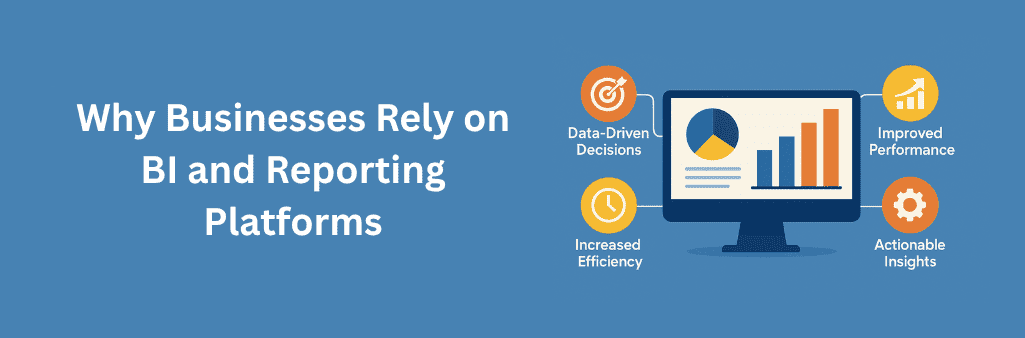
Key Benefits of Using Business Intelligence Tools
Companies are increasingly turning to BI reporting platforms for end-to-end analytics. These tools help users access sales reporting software that provides real-time insights. For example, Power BI sales reports and Office 365 Power BI integration enable teams to make decisions based on live data.
Business intelligence service providers offer seamless implementation, helping businesses focus on outcomes rather than IT complexity. Reporting capabilities are scalable, supporting departments from sales and finance to IT services reporting.
Essential Functions for Data-Driven Organizations
Choosing the right business intelligence software depends on the features your business needs most. Common features include:
Tools like Share Power BI report features allow teams to collaborate and distribute insights easily. Modern reporting platforms support integration with CRM, ERP, and cloud storage, enabling holistic data analysis.
For marketing teams, marketing reporting tools offer clear campaign performance metrics. With integrated business intelligence reporting, marketers track KPIs, ROI, and audience trends effectively.

Enhancing Sales Strategy Through Insightful Reporting
BI and analytics platforms support smarter sales management. Using tools like Power BI sales reports, teams identify trends, forecast demand, and optimize campaigns.
Access to accurate customer information enhances personalization, while business analytics and reporting uncover behavioural patterns. Sales teams benefit from real-time alerts via Power BI email report capabilities.
When integrated with CRM, business intelligence tools provide a 360-degree view of customer interactions. This boosts conversion rates and improves client relationships.
For retail businesses, like Ginkgo Retail, BI reporting ensures accurate inventory tracking, seasonal demand forecasting, and customer loyalty analysis.
Business Intelligence Reporting Tools empower organizations to convert vast amounts of raw data into meaningful insights that guide critical decisions. By integrating multiple data sources—from CRM and ERP systems to marketing and finance databases—these tools provide a unified view of company performance. Advanced BI dashboards enable real-time tracking of KPIs, helping executives identify opportunities and mitigate risks faster. Whether using Power BI, Oracle BI, or cloud-based analytics solutions, businesses that adopt intelligent reporting systems make quicker, evidence-based decisions that fuel growth and profitability.
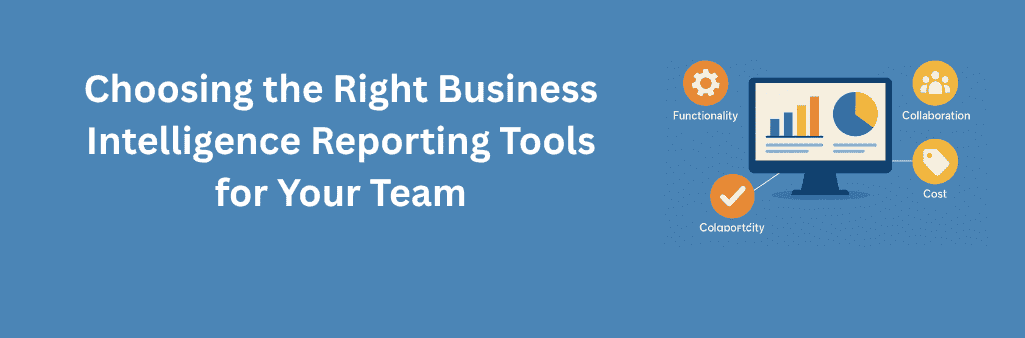
Selecting the best Business Intelligence Reporting Tools depends on your team’s size, goals, and data complexity. Modern BI software offers intuitive interfaces, real-time dashboards, and automation that reduce manual work. Sales teams benefit from tools that generate Power BI email reports, while marketers need Marketing reporting tools to measure campaign success. Integrated business intelligence tools ensure every department accesses accurate customer information when needed. Look for platforms that support scalability, mobile access, and advanced data modelling. Businesses like Ginkgo Retail optimize performance by choosing tools aligned with their unique analytics needs.
Modern Business Intelligence Reporting Tools go beyond analytics; they foster collaboration across departments. Teams can easily share interactive dashboards, automated reports, and live data visualizations, ensuring everyone—from marketing to IT—works from the same set of accurate insights. Integrated platforms like Office 365 Power BI and Google Data Studio simplify data sharing, allowing teams to comment, edit, and update reports in real time. This collaborative approach enhances productivity, aligns strategy across business units, and ensures that data-driven insights lead to coordinated, goal-oriented action.
Ginkgo Retail uses advanced BI software to manage sales, customers, and product performance. Through business intelligence reporting, they track customer behaviours across multiple channels.
With Power BI data integration, they visualize daily sales and compare store performance. Their marketing teams rely on marketing reporting tools for campaign planning and ROI tracking.
Ginkgo Retail uses Oracle BI reporting and Office 365 Power BI to generate executive dashboards. These reports highlight trends, product margins, and promotional effectiveness.
By using business analytics and reporting, Ginkgo saves time, cuts costs, and makes smarter business decisions faster.
Choosing the right business intelligence reporting tools transforms the way you operate. Whether you’re managing sales data, marketing metrics, or customer trends, BI software delivers clarity.
From real-time dashboards to predictive analytics, these tools allow professionals like a Business intelligence analyst to uncover insights quickly. Platforms like Power BI, Oracle BI, and others provide customizable, scalable reporting that fits businesses of any size.
Retailers like Ginkgo Retail are already seeing results. With smart integration and automated reporting, they’re staying ahead of market trends and consumer needs.
Investing in the right reporting platforms can redefine your organization’s success in a data-driven world.

Obaid Arshad is the CEO/Founder of Ginkgo Business Solution. He has diverse experience of 10+ years in versatile domains of e-commerce, logistics and tech-oriented business. His eminent role in ecommerce management empowered him to benefit the industry with his knowledge, vision and experience.
Digital Wallet