
Efficient Inventory Management System to Elevate Retail Operations

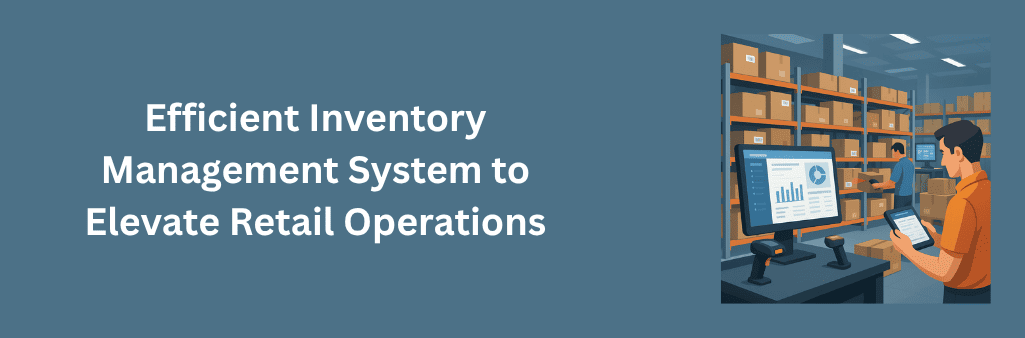
A modern warehouse interior with tall, neatly organized shelves of boxes. In the foreground, a touchscreen monitor displays inventory charts and key metrics, alongside two barcode scanners. A worker in the foreground holds a handheld device reviewing stock data, while another worker scans a box in the background, illustrating an efficient inventory management system elevating retail operation

Managing inventory in the modern retail environment requires more than just keeping tabs on products—precision, automation, and integration are key. An advanced inventory management system offers real-time stock visibility, predictive alerts, and seamless coordination across sales channels. It reduces manual errors and minimizes stockouts or overstocking through intelligent tracking. When combined with a product information management system, it ensures consistent, accurate product data from supplier to shelf—online and offline.

Today’s sophisticated inventory management software doesn’t just track quantities—it redefines how businesses approach warehousing, procurement, replenishment, and returns management. By integrating with comprehensive business software, it empowers managers with actionable insights, demand forecasts, and better financial control.

The synergy between business operations software, retail management software, and ecommerce inventory management tools creates a unified system that’s agile, scalable, and future-ready. This integration turns inventory from a cost centre into a strategic asset, streamlining workflows and accelerating growth across retail operations.

Why a Strong Inventory Management System Matters for Businesses

  1. Manages stock levels and prevents overstock or stockouts.
  2. Integrates with product information management software for accurate product data.
  3. Syncs across channels via ecommerce management tools.
  4. Includes returns management software to ease reverse logistics.
  5. Connects with inventory control software for warehouse optimization.

These features boost efficiency and reduce cost. Every business benefits from a management system software that centralizes operations.

Key Features of Best-in-Class Inventory Management Software

A modern flat-style digital illustration showing a computer monitor at centre displaying an inventory dashboard with charts and graphs. Around it are connected circular icons representing barcode scanning, mobile scanning, API integration, box tracking, analytics chart, and gear settings, highlighting the key features of best-in-class inventory management software
  • Automated Stock Alerts: Notifications when stock dips below thresholds.
  • Barcode & RFID Integration: Speeds up inventory management system checks.
  • Multi-Channel Synchronization: Supports ecommerce inventory management and physical stores.
  • Analytics Dashboard: Offers insights via business management system tools.
  • Returns Processing: Simplified via returns management software.
  • Supplier Portal: Helps update product management software data.

These capabilities streamline operations, improve accuracy, and scale with growth.

Maximizing Efficiency with Retail Management Software

Using tailored retail management system solutions benefits stores by:

  • Managing point-of-sale and inventory in one platform.
  • Updating product software information quickly.
  • Enabling seamless ecommerce management across online and offline channels.
  • Enhancing workflows with operations management software features.
  • Tracking returns with built-in returns management modules.

This integration ensures consistency and service excellence.

Integrating Product Information Management Software for Clean Data

A flat-style illustration with a central cylindrical database icon and a gear overlay, linked by thin lines to five circular icons representing a spreadsheet, data validation checkmark, e-commerce storefront on a laptop, document, and a smartphone, set against a backdrop of faint binary code to depict integrating PIM software for clean data

Clean product data reduces errors and increases sales. Product information management system tools:

  • Maintain unified product descriptions.
  • Ensure consistent SKUs and images across channels.
  • Improve search and filtering in inventory control software.
  • Enhance marketing and product launch efficiency.

Combining this with inventory management system ensures stock aligns with data accuracy.

Benefits of Robust Ecommerce Inventory Management

Retailers sell on multiple channels. Inventory management software for ecommerce ensures:

  • Real-time stock syncing across online platforms.
  • Avoidance of double-selling.
  • Reliable delivery dates, improving customer faith.
  • Integration with returns management software for post-sale support.
  • Data sharing with business software for financial reporting.

This leads to smoother operations and higher customer satisfaction.

Developing Product Management Skills for Effective Operations

A flat-style illustration of a woman holding a notebook and pen in front of a large gear. Surrounding the gear are icons of a target with an arrow, a light bulb, a checklist, upward-trending bar charts, and progress indicators, representing the development of product management skills for effective operations

Staff training is vital. Vital product management skills include:

  • Data entry accuracy.
  • Analytical interpretation of stock trends.
  • Handling returns management processes efficiently.
  • Collaborating with IT teams on tool customization.
  • Reporting inventory anomalies using inventory control software.

Fostering these skills empowers teams to extract full value from their systems.

 How Ginkgo Retail Transformed Operations with an Inventory Management System

Flat-style digital illustration showing a warehouse worker surrounded by packages looking stressed, while a business professional approaches with analytics displayed on a screen, featuring the Ginkgo Retail logo

Ginkgo Retail, a growing multi-channel fashion and lifestyle brand, faced mounting challenges as it scaled. Stock discrepancies, inefficient product updates, and return-related delays were affecting customer satisfaction and profitability. To regain control, Ginkgo Retail implemented a fully cloud-based inventory management system integrated with a powerful product information management system.

This strategic upgrade revolutionized how the business operated. By automating inventory tracking and setting smart reorder thresholds, Ginkgo Retail reduced stockouts by 35%, ensuring best-sellers remained available across both physical stores and ecommerce platforms. The new product management software allowed marketing and merchandising teams to update product descriptions, images, and specifications in real-time—improving consistency and boosting customer trust.

Returns, previously a manual and time-consuming process, were fully digitized using returns management software, leading to a 40% faster return-to-shelf cycle and significant cost reductions. Furthermore, the seamless integration of the new system with their broader business operations software and ecommerce management tools cut manual data entry errors by over 50%. Staff productivity rose, and customer satisfaction ratings improved significantly.

Today, Ginkgo Retail operates with higher agility, better data insights, and improved operational alignment—demonstrating how the right inventory management system can drive measurable business growth and competitive advantage.

Choosing the Best Management System Software

Comparison factors:

Criterion

Importance

Integration

Works with your business software, POS, ERP

Scalability

Supports growth, new stores, ecommerce inventory management

User-Friendliness

Enables teams to adapt quickly without complex training

Analytics & Reporting

Agility via operations management software

Value for Money

ROI from cost savings and revenue enhancement

Support & Updates

Crucial for system uptime in retail and ecommerce management

A smart choice enhances efficiency, reduces risk, and unlocks growth.

Streamlined Returns Management Improves Customer Satisfaction

  • Returns management software automates RMA workflows.
  • Tracks return and assign to either restock or disposal.
  • Integrates data with inventory control software to refresh stock.
  • Decreases delays and errors in reverse logistics.
  • Strengthens customer trust and brand loyalty.

This round-trip automation boosts operational and customer-facing performance.

Enhanced Summary:

An advanced inventory management system, when combined with a robust product information management system, purpose-built inventory management software for ecommerce, and seamless returns management software, forms the operational backbone of modern retail businesses. This integration creates a responsive, scalable, and highly accurate infrastructure that connects in-store processes with online operations and backend logistics. It eliminates inventory errors, reduces operational silos, and ensures a consistent product experience across every customer touchpoint.

Equipped with strong product management skills, retail teams can extract meaningful insights, respond faster to demand changes, and make data-driven decisions that directly impact profitability. Businesses that invest in comprehensive business management system tools stay agile and resilient in a rapidly evolving market. By transforming inventory into a strategic asset, not a cost centre, retailers unlock greater control, efficiency, and visibility.

Retail leaders like Ginkgo Retail exemplify how leveraging integrated, intelligent systems leads to sustainable growth, smoother workflows, and elevated customer satisfaction across all channels.

FAQs:  

  1. What is an inventory management system, and why is it essential for Ginkgo Retail?
    An inventory management system tracks stock, automates alerts, syncs with ecommerce inventory management, and cuts losses for Ginkgo Retail.
  2. How does inventory management software differ from inventory control software?
    Software focuses on tracking and alerts, while control software optimizes storage, layout, and physical movement.
  3. Can a product information management system integrate with ecommerce inventory management tools?
    Yes. It centralizes product data, ensuring accurate inventory syncing across sales channels.
  4. What features define strong business operations software in retail?
    Look for features like analytics, multi-channel sync, POS integration, and reverse logistics support.
  5. Does returns management software integrate into an inventory system?
    Absolutely. Integration ensures returned products re-enter stock accurately, reducing data gaps.
  6. Can small retailers benefit from a retail management system?
    Yes. Even small retailers who sell online and offline gain from unified stock, sales, and returns management.
  7. Is product management software used to improve product management skills?
    Indirectly, yes. Better tools drive better practices and support staff training in data accuracy and reporting.
  8. How did Ginkgo Retail benefit from adopting an inventory management system?
    Ginkgo Retail cut stockouts by 35%, halved manual errors, and boosted returns efficiency by integrating smart software.

Written by

Picture of Obaid Arshad

Obaid Arshad

CEO & Founder Ginkgo Retail & Comverse | Serial Entrepreneur | Award-Winning SaaS Innovator | E-commerce Veteran | Team Builder | Building AI-driven E-commerce Solutions. He has diverse experience of 10+ years in versatile domains of e-commerce, logistics and tech-oriented business. His eminent role in ecommerce management empowered him to benefit the industry with his knowledge, vision and experience.

Digital Wallet

Related