
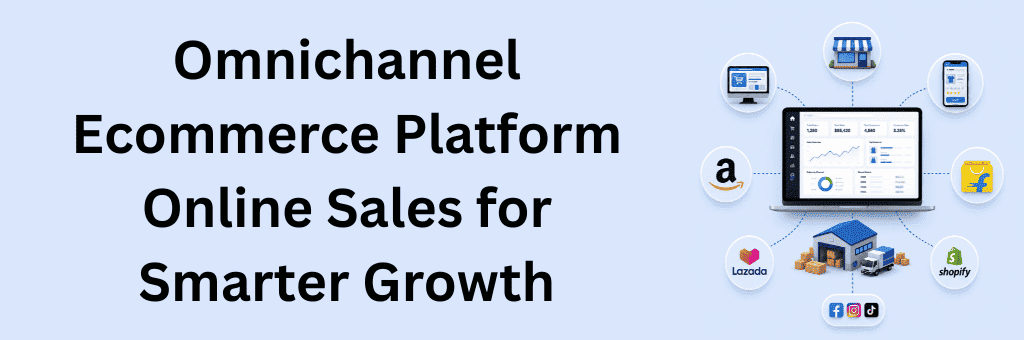
Modern retailers need connected systems to compete across digital shopping channels. Therefore, Omnichannel ecommerce platform online sales strategies create stronger visibility and smoother operations. An omnichannel ecommerce platform connects stores, marketplaces, inventory, orders, and customer information. Moreover, ecommerce channel management helps teams control every sales channel from one place. Connected Online Sales operations also reduce delays and prevent confusing customer experiences. As a result, retailers can respond faster to changing demand and buying patterns. Omnichannel Ecommerce technology also gives shoppers consistent product information everywhere. Consequently, brands can scale without adding unnecessary operational complexity. Better Ecommerce Management creates a stronger foundation for profitable digital growth.
Customers now move between websites, marketplaces, social channels, and physical stores. Therefore, retailers need one connected view of every customer journey. Omnichannel ecommerce multi-channel management helps businesses coordinate products, pricing, inventory, and orders. In addition, shared data reduces gaps between sales and fulfillment teams. Strong Ecommerce channel management importance becomes clear during rapid sales growth. Without coordination, different channels may display outdated prices or unavailable products. However, connected Channel Management keeps product information aligned across every active storefront. Consequently, customers receive consistent information before making purchasing decisions. Retailers also gain better control over promotions and channel performance. Thus, connected commerce supports stronger sales without creating fragmented daily workflows.
A unified system replaces repetitive channel updates with structured automation. First, teams can publish product changes across multiple storefronts quickly. Next, orders can enter one shared operational workflow. Moreover, customer information becomes easier to review and manage. Ecommerce channel management software benefits include speed, consistency, visibility, and simplified operations. As a result, staff spend less time correcting repeated manual updates. Instead, teams can focus on merchandising, customer service, and growth planning.
Accurate inventory remains essential for successful multichannel retail operations. Therefore, Omnichannel ecommerce inventory synchronization keeps stock information aligned across selling channels. Every confirmed sale can update available quantities within connected systems. Meanwhile, returns, transfers, and adjustments can refresh inventory positions. This approach supports reliable ecommerce inventory synchronization across stores and digital channels. Consequently, customers see more dependable product availability before checkout. Retailers also reduce overselling, cancellations, and avoidable service complaints. Better stock visibility helps teams plan replenishment with greater confidence. Additionally, connected inventory supports faster fulfillment decisions across warehouses and stores. Reliable data therefore strengthens both customer satisfaction and operational control.
Strong platforms should support practical features for everyday retail operations. Key Ecommerce channel management key features include:
These capabilities improve control across growing ecommerce environments. Moreover, Ecommerce channel management reduces errors during frequent operational updates. Teams can therefore maintain cleaner data across every connected sales channel.
Shoppers expect convenience, accurate information, and flexible buying options. Therefore, an Omnichannel ecommerce customer experience should remain consistent across every interaction. Customers may research online before visiting a physical store. Others may purchase through marketplaces and request support through another channel. Consequently, connected systems should retain relevant order and customer information. This visibility helps service teams answer questions without unnecessary delays. Moreover, consistent pricing and inventory information builds stronger customer trust. Smooth journeys also reduce friction between browsing, purchasing, fulfillment, and support. As a result, retailers can improve retention while supporting repeat purchases. Better experiences can therefore strengthen Omnichannel ecommerce platform business growth over time.
Common Ecommerce Channel Management Challenges
Retailers often face integration gaps while adding new digital channels. However, Ecommerce channel management challenges can also include inconsistent product data. Inventory delays may create overselling during busy sales periods. Separate order systems can also slow fulfillment and customer support. Therefore, retailers should prioritize connected data and dependable system integrations. Clear workflows also help teams manage exceptions more efficiently. Additionally, scalable platforms should support new channels without major operational disruption. Better planning reduces complexity as the business expands.

Ginkgo Retail helps retailers connect commerce operations through centralized workflows. Therefore, businesses can manage channels, inventory, orders, and operational visibility together. The platform supports omnichannel ecommerce platform requirements across connected retail environments. Moreover, centralized ecommerce channel management can simplify daily marketplace and storefront operations. Inventory visibility also supports accurate availability across participating sales channels. As a result, teams can reduce repeated manual work and improve coordination. Ginkgo Retail also supports connected order processing for growing retail operations. Consequently, businesses can build smoother experiences across online and offline touchpoints. This approach supports scalable Retail Technology without adding disconnected operational systems.
Successful digital retail depends on connected systems and dependable operational data. Therefore, Omnichannel ecommerce platform online sales strategies link channels, inventory, orders, and customers. A connected approach reduces duplication and improves daily visibility. Moreover, synchronized information supports faster decisions across sales and fulfillment teams. Retailers can also create more consistent experiences across every customer touchpoint. Consequently, stronger channel control can support sustainable ecommerce expansion. Ginkgo Retail helps businesses connect these operations through centralized retail workflows. Ultimately, connected commerce creates a stronger foundation for scalable online growth.
What is an omnichannel ecommerce platform?
An omnichannel ecommerce platform connects sales channels, inventory, orders, and customer information. Therefore, retailers can manage multiple touchpoints through shared operational data.
Ginkgo Retail connects commerce workflows across channels and operational systems. Consequently, teams can improve visibility while managing growing Online Sales activity.
Ecommerce channel management keeps product, pricing, inventory, and order information coordinated. Therefore, retailers can reduce channel conflicts and improve operational consistency.
Ginkgo Retail centralizes inventory visibility across connected retail operations. As a result, teams can maintain accurate stock information between participating sales channels.
Ginkgo Retail can support centralized order, inventory, and channel workflows. Therefore, fewer manual updates can reduce avoidable operational errors.
Retailers should consider omnichannel tools when channels become difficult to manage separately. Moreover, rapid growth often increases the need for centralized control.
Ginkgo Retail can centralize channel-related workflows and operational data. Consequently, teams gain stronger coordination across marketplaces, storefronts, inventory, and orders.
Ginkgo Retail helps connect core retail workflows as operations expand. Therefore, businesses can scale channels without relying on fragmented management processes.

CEO & Founder Ginkgo Retail & Comverse | Serial Entrepreneur | Award-Winning SaaS Innovator | E-commerce Veteran | Team Builder | Building AI-driven E-commerce Solutions. He has diverse experience of 10+ years in versatile domains of e-commerce, logistics and tech-oriented business. His eminent role in ecommerce management empowered him to benefit the industry with his knowledge, vision and experience.
Digital Wallet