
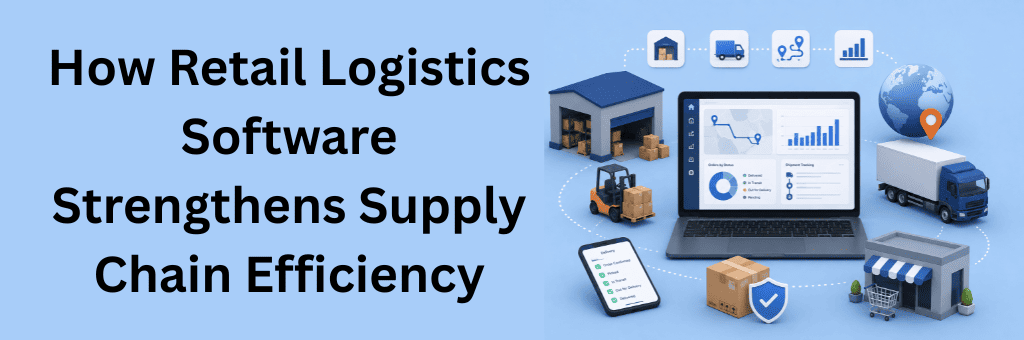
Modern retailers handle orders, inventory, warehouses, couriers, and customer updates daily. Therefore, retail logistics software brings these activities into one connected system. It supports faster decisions and clearer operational control. Moreover, software logistics ecommerce tools organize online orders across stores and marketplaces. Reliable retail shipping software also automates labels, rates, and courier selection. Meanwhile, retail logistics tracking provides live shipment status and delivery alerts. Many leaders ask, What is retail logistics software and how does it improve supply chain efficiency? It improves efficiency through automation, visibility, and accurate data. Consequently, retailers reduce delays, avoid errors, and serve customers more consistently. These gains support profitable growth across every sales channel.
Retail logistics software connects the complete movement of goods. It manages orders from checkout through final delivery. Additionally, it links inventory, warehouses, carriers, returns, and customer notifications. This connection strengthens retail supply chain management across departments.
Teams view stock before assigning each order. Then, the system selects the best fulfillment pointConsequently, retailers shorten delivery routes and minimize unnecessary stock movement.
Core functions include:
Consequently, managers gain one reliable operational view.
Growing stores receive orders from websites, applications, and marketplaces. However, manual processing creates delays and stock mistakes. Software logistics ecommerce connects those channels with inventory and fulfillment workflows.
First, the platform imports every order automatically. Next, it checks stock and assigns the correct location. Then, ecommerce fulfillment automation starts picking, packing, and shipping tasks. This process removes repeated data entry.
Furthermore, connected workflows improve customer communication. Buyers receive timely confirmation, dispatch, and delivery updates.
A scalable system should handle peak sales periods. Therefore, retailers process larger volumes without excessive manual work. Better automation protects service quality during campaigns and seasonal demand.
Retail shipping software simplifies complicated shipping decisions. It compares courier rates, delivery areas, service levels, and arrival times. Therefore, teams can choose cost-effective options for every order.
A strong courier management system creates labels and tracking numbers automatically. Moreover, it sends shipment data directly to the selected carrier. These steps reduce typing errors and missed details.
Key benefits include:
Additionally, multi-channel shipping keeps fulfillment rules consistent across marketplaces. This control helps brands maintain delivery standards everywhere. As a result, customers receive predictable service across websites, applications, and stores.
Retail logistics tracking shows each shipment’s latest movement and delivery stage. Managers identify delayed, failed, or returned orders early. Therefore, teams respond before problems damage customer trust.
Tracking systems provide dispatch scans, courier updates, delivery estimates, and exception alerts. They also store delivery performance for later analysis. Consequently, retailers compare carriers, locations, and service levels.
Customers benefit from transparent updates. Meanwhile, service teams access accurate information during delivery questions.
The main benefits include better communication and faster issue resolution. Additionally, reports reveal recurring delays.
Retail logistics software reduces delays through smarter order routing. It sends orders toward available stock and suitable couriers. Therefore, products move through shorter and more reliable paths.
Cost control improves through automated rate comparison. The platform selects services using weight, location, speed, and price. However, managers can still define preferred carriers and rules.
Warehouse teams also receive tasks earlier. Consequently, they prepare orders before courier collection deadlines. Better planning reduces missed pickups and expensive express shipping.
Furthermore, accurate data prevents duplicate shipments and incorrect addresses.
Disconnected inventory records often cause overselling and delayed fulfillment. In contrast, retail logistics software updates stock throughout order processing. Managers view available, reserved, packed, shipped, and returned quantities.
Modern warehouse visibility tools show product locations and task progress clearly. Therefore, supervisors identify slow picking zones or packing bottlenecks. They can also balance workloads across teams.
Additionally, live visibility improves replenishment planning. Buyers order stock before critical products run out. Store teams also know which items remain available.
Consequently, retailers reduce cancellations and improve fulfillment reliability.

Ginkgo Retail helps retailers connect orders, inventory, warehouses, and shipping workflows. Its approach supports visibility across ecommerce and physical retail operations.
The platform can strengthen ecommerce fulfillment automation through coordinated order handling. It also supports a connected courier management system for shipping execution. Furthermore, dashboards provide practical warehouse visibility tools for daily control.
Ginkgo Retail helps teams grow without losing operational clarity. Therefore, retailers can improve order accuracy, delivery speed, and customer communication.
Efficient logistics requires automation, accurate information, and coordinated teams. Retail logistics software brings these elements into one operational structure. It improves shipping, tracking, warehouse control, and inventory decisions.
Moreover, retail shipping software supports faster courier processing and consistent fulfillment rules. Software logistics ecommerce solutions also help online stores scale across channels. Finally, Ginkgo Retail gives growing businesses connected tools for stronger logistics performance.
Retail logistics software connects orders, inventory, warehouses, couriers, tracking, and returns. Therefore, it reduces delays and manual work.
Ginkgo Retail connects marketplace orders with inventory and fulfillment workflows. Consequently, teams manage online operations from one coordinated environment.
Retail shipping software automates labels, courier selection, and tracking updates. As a result, teams dispatch orders faster.
Ginkgo Retail supports shipment updates, exception visibility, delivery status, and operational reporting. Therefore, teams resolve delivery issues earlier.
It improves routing, compares courier services, and prevents dispatch errors. Consequently, retailers reduce delays and unnecessary shipping expenses.
Ginkgo Retail suits growing stores needing connected orders, inventory, warehouses, and shipping. Moreover, its workflows support scalable operations.
Ginkgo Retail can coordinate shipping details, courier workflows, labels, and tracking. Therefore, teams reduce repetitive administration.
Yes. Ginkgo Retail connects fulfillment workflows across websites, stores, and marketplaces. Consequently, retailers maintain consistent shipping control.

CEO & Founder Ginkgo Retail & Comverse | Serial Entrepreneur | Award-Winning SaaS Innovator | E-commerce Veteran | Team Builder | Building AI-driven E-commerce Solutions. He has diverse experience of 10+ years in versatile domains of e-commerce, logistics and tech-oriented business. His eminent role in ecommerce management empowered him to benefit the industry with his knowledge, vision and experience.
Digital Wallet