

Warehouse inventory management is the backbone of efficient supply chains. It empowers retailers to track, organize, and control stock in real-time. Using a powerful inventory management system, businesses can reduce costs, prevent overstocking, and eliminate out-of-stock scenarios. Retailers now integrate POS inventory systems, online inventory management tools, and ERP inventory systems to boost operational accuracy.
Today’s competitive market demands seamless tracking, and that’s where inventory programs, CRM with inventory management, and the best inventory management software play a vital role. Choosing the right retail inventory software enhances accuracy, increases productivity, and supports scalable growth. Whether you’re in retail, eCommerce, or IT, using a robust product inventory management software ensures success from warehouse to customer.
Efficient warehouse inventory management improves supply chain visibility and order fulfillment speed. Managing inventory manually increases human errors and delays.
Benefits of Smart Inventory Management:
Retailers today rely on retail store inventory management software to maintain organized stock levels and automate inventory tracking. This helps monitor demand trends and adjust purchasing accordingly. Implementing an electronic inventory system improves accuracy and saves time.
Retailers using CRM and inventory management solutions gain insights into customer behaviour and stock movement. This combination improves both customer service and inventory control.
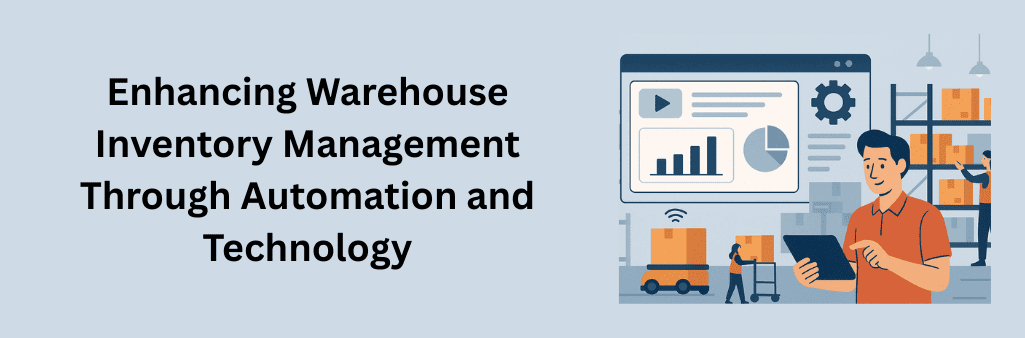
Modern warehouse inventory management thrives on automation, accuracy, and scalability. By integrating automated tools like barcode scanning, RFID tagging, and AI-driven analytics, businesses can eliminate manual errors and streamline operations. These technologies offer real-time inventory visibility, reduce human intervention, and speed up order processing. Using a smart inventory control system ensures every item is tracked from arrival to shipment. Retailers also benefit from integrated CRM and inventory management systems, which align customer orders with stock availability. With solutions like online inventory management and retail store inventory management software, warehouses run more efficiently. Investing in tech-enabled warehouse inventory management helps retailers respond faster to market demands while maintaining control over their supply chain. This not only reduces operational costs but also boosts customer satisfaction and retention.
Selecting the best inventory management software depends on your business size, industry, and growth goals.
Key Features to Consider:
Whether you need inventory management software for eCommerce, or a robust IT inventory system, flexibility is key. ERP inventory systems like Oracle inventory management provide full-scale solutions for enterprise-level operations.
Retailers often benefit from a retail inventory system that integrates with their POS. This enables better store inventory control, ensures real-time updates, and reduces errors.
The shift to online inventory management has revolutionized how warehouses operate. With cloud-based inventory programs, managers can access inventory data anytime, anywhere.
Advantages of Online Inventory Solutions:
Product inventory management software for retail and eCommerce simplifies tracking, reordering, and analytics. The best systems offer intuitive dashboards and AI-powered forecasting.
Combining CRM with inventory management bridges the gap between sales and logistics. It allows businesses to better serve customers by aligning stock availability with demand patterns.
POS systems with built-in inventory control systems ensure real-time updates across platforms. Retailers benefit from automated order processing, low stock alerts, and efficient warehouse management.
For multi-location businesses, the integration of CRM and POS inventory systems ensures stock visibility across all stores. This reduces delays, boosts service speed, and enhances customer satisfaction.
Store inventory control ensures the right product is always available when needed. Without proper control, retailers face stockouts or deadstock, both of which impact profits.
Modern retail inventory software supports barcode scanning, dynamic pricing, and demand forecasting. These tools help store managers make data-driven decisions and optimize stock placement.
Using an electronic inventory system, businesses can instantly update stock levels, track item movement, and receive real-time alerts. This minimizes loss and boosts profitability.
An ERP inventory system provides centralized control over purchasing, stock movement, and reporting. It’s perfect for large operations that need deeper inventory insights.
Oracle inventory management is one example of a comprehensive ERP that enhances efficiency across departments. It integrates accounting, procurement, and stock management in one platform.
With real-time updates and predictive analytics, ERP solutions help retailers streamline operations, minimize waste, and improve cash flow.
Ginkgo Retail offers advanced inventory solutions for modern retail businesses. Its intuitive interface, powerful features, and seamless integration help retailers scale faster.
From warehouse inventory management to CRM integration, Ginkgo Retail ensures end-to-end visibility and control. Businesses using Ginkgo benefit from accurate forecasting, fast order fulfillment, and better customer experiences.
Whether you’re in need of a retail inventory system, an IT inventory system, or a powerful CRM and inventory management platform, Ginkgo Retail delivers.
Efficient warehouse inventory management is essential for modern retail and eCommerce success. Integrating the right tools, like CRM with inventory management and a smart POS inventory system, helps businesses scale confidently.
Ginkgo Retail stands out as a robust, flexible solution that supports every aspect of inventory control, from warehouse to checkout.
8. What’s the difference between ERP inventory systems and basic inventory software?
ERP systems like Oracle provide enterprise-wide integration, while basic tools focus on inventory only.

CEO & Founder Ginkgo Retail & Comverse | Serial Entrepreneur | Award-Winning SaaS Innovator | E-commerce Veteran | Team Builder | Building AI-driven E-commerce Solutions. He has diverse experience of 10+ years in versatile domains of e-commerce, logistics and tech-oriented business. His eminent role in ecommerce management empowered him to benefit the industry with his knowledge, vision and experience.
Digital Wallet