
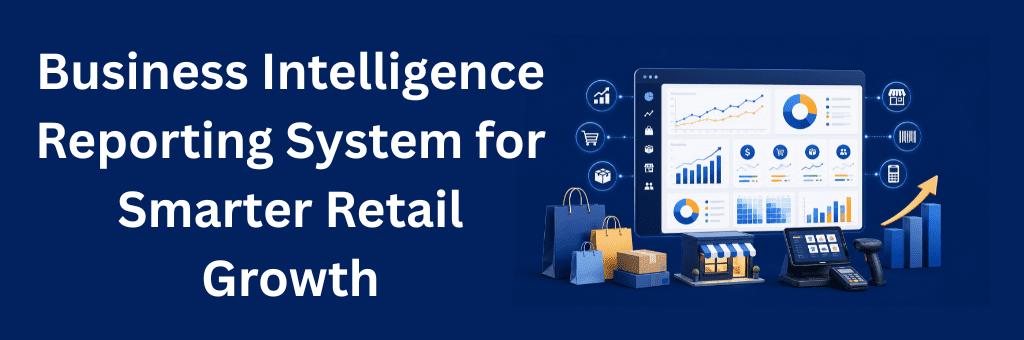
Modern retailers manage large amounts of operational data every day. Therefore, a business intelligence reporting system helps teams understand that data quickly. It combines reporting analytics, retail business intelligence, and interactive retail dashboards. As a result, managers can monitor sales, stock, customers, and store performance. These insights also support faster and more confident decisions. Moreover, sales analytics reveal strong products and weak sales areas. Inventory forecasting also helps retailers prepare for future demand. Instead of using separate spreadsheets, teams access one reliable reporting environment. Consequently, departments work with consistent information. This approach reduces confusion and supports sustainable retail growth. It also helps leaders respond quickly to changing market conditions.
A business intelligence reporting system collects information from different business platforms. For example, it can connect sales, finance, warehouse, and ecommerce systems. The platform then organizes data into useful reports and visual summaries.
Traditional reports often show past results only. However, modern reporting analytics explains current performance and possible future outcomes. Managers can explore trends without reviewing thousands of records.
Clear reporting also improves communication across departments. Therefore, finance and operations teams can follow matching performance figures. Retail decision-makers can create clear objectives based on reliable performance insights.
Modern platforms also reduce manual reporting work. Consequently, employees spend more time solving problems and improving customer experiences.
Important reporting capabilities include:
Retailers must understand which products generate revenue and profit. Therefore, retail dashboards provide an organized view of daily sales activity. They can show revenue, margins, returns, discounts, and transaction volumes.
A strong business intelligence reporting system also compares performance across stores. As a result, managers can identify successful locations and underperforming branches. They can then investigate pricing, staffing, or product availability issues.
Moreover, sales analytics can measure product performance across channels. Retailers can compare physical stores, websites, mobile applications, and marketplaces. This visibility supports better channel planning.
Real-time information also helps teams react during promotions. For instance, managers can increase stock when demand rises unexpectedly. Consequently, the business can reduce missed sales opportunities.
Sales metrics retailers should monitor:
Poor inventory planning creates financial and operational problems. Excess stock increases storage costs and ties up working capital. Meanwhile, shortages disappoint customers and reduce revenue.
Retail business intelligence helps companies understand stock movement across locations. Therefore, teams can identify fast-selling, slow-moving, and seasonal products. They can also monitor inventory age and stock turnover.
Additionally, inventory forecasting uses historical sales and current demand patterns. The process helps retailers estimate future stock requirements. As a result, buyers can create more accurate purchase plans.
Modern inventory forecasting solutions may also consider promotions and regional demand. Some tools evaluate supplier lead times and seasonal events. Consequently, businesses can reduce emergency purchasing and expensive stock transfers.
Accurate forecasting also supports stronger supplier discussions. Retailers can share clearer demand estimates and improve delivery planning.
Customers create valuable data during every shopping journey. However, raw transaction data offers limited value without structured analysis. Therefore, reporting analytics converts customer activity into practical insights.
Retailers can identify frequently purchased products and preferred shopping channels. They can also study buying times, basket sizes, and repeat purchase patterns. Consequently, marketing teams can create more relevant campaigns.
Retail business intelligence also supports customer segmentation. For example, retailers can group shoppers by spending level or product interest. Personalized offers can then target each group more effectively.
Moreover, customer trend analysis helps businesses recognize changing preferences. Teams can adjust product ranges before demand falls significantly. As a result, retailers protect sales and improve customer satisfaction.
These insights also help improve loyalty strategies. Managers can measure campaign responses and reward programme performance clearly.
Businesses should choose tools that support both current and future reporting needs. A suitable business intelligence reporting system must remain simple for regular users. However, it should also provide detailed features for analysts.
Data integration remains an essential requirement. The platform should connect with ERP, POS, CRM, and ecommerce systems. Therefore, teams can avoid fragmented information and repeated data entry.
Furthermore, real-time retail dashboards should update information without long delays. Quick updates allow managers to respond to stock, sales, and staffing issues.
Strong access controls also protect sensitive information. Each user should only view relevant dashboards and reports. In addition, mobile access can help managers review results from different locations.
Key features to evaluate:
Retail profitability depends on more than sales growth. Costs, margins, stock levels, and operational speed also affect results. Therefore, business analytics software helps leaders evaluate the complete business picture.
Managers can compare planned targets with actual performance. They can also locate waste, delays, and unnecessary expenses. Consequently, teams can focus on high-impact improvement areas.
A business intelligence reporting system also supports better workforce planning. Store leaders can compare customer traffic with staffing levels. As a result, they can schedule employees more efficiently.
Furthermore, accurate reports improve pricing and promotion decisions. Retailers can measure whether discounts increase profit or reduce margins. This insight protects revenue during competitive campaigns.
Operational reporting also highlights delivery delays and supplier issues. Therefore, procurement teams can select reliable partners and improve service quality.
Traditional reporting usually depends on static spreadsheets and scheduled summaries. These methods often require manual data preparation. Therefore, information may become outdated before managers review it.
Modern reporting analytics offers interactive exploration and automated updates. Users can filter reports by product, location, channel, or date. They can also investigate performance changes instantly.
Static reports explain what happened during a past period. In contrast, modern tools explore why changes happened. Advanced systems can also suggest what may happen next.
Furthermore, real-time retail dashboards provide continuous operational visibility. Teams can access updated insights without depending on scheduled weekly summaries.Consequently, companies can resolve emerging issues before they cause higher operational costs. Modern analytics brings essential business data together within one reliable reporting environment.
Modern retailers cannot rely on outdated reports when market conditions change quickly. Therefore, a business intelligence reporting system provides real-time reporting that keeps decision-makers informed throughout the day. It continuously collects and updates information from sales, inventory, finance, and ecommerce platforms.
Real-time dashboards help managers detect sudden changes in demand, inventory shortages, and declining sales performance. As a result, they can respond immediately instead of waiting for end-of-day or weekly reports. Faster visibility also reduces operational risks and improves customer satisfaction.
Additionally, reporting analytics allows users to customize dashboards based on their responsibilities. Store managers can monitor daily sales, while warehouse teams focus on inventory movement and stock availability. Executives can view company-wide KPIs from a single reporting interface.
With accurate and continuously updated insights, businesses make faster decisions, improve collaboration across departments, and maintain better control over retail operations. Consequently, real-time reporting becomes an essential capability for every growing retail organization.
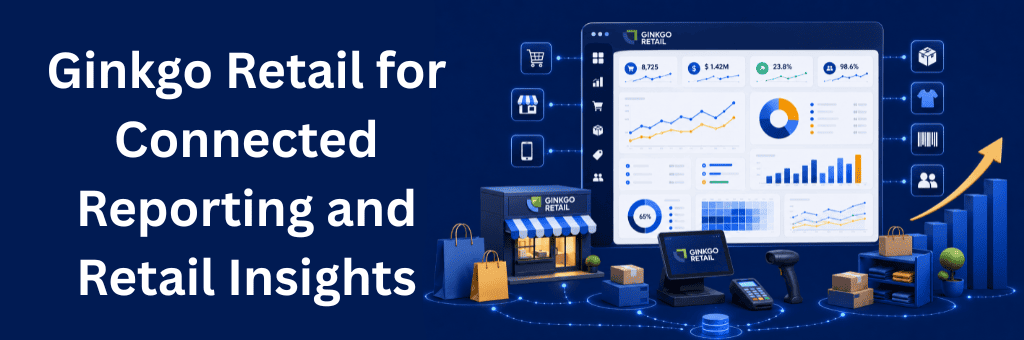
Ginkgo Retail helps businesses connect operations with actionable retail information. Its solutions bring sales, inventory, ecommerce, and performance data together. Therefore, managers can view key results through organized reporting tools.
The platform supports retail business intelligence across stores and digital channels. It also helps businesses build practical retail dashboards for daily monitoring. As a result, teams can understand sales, margins, inventory, and customer behaviour.
Moreover, Ginkgo Retail supports integration with broader retail operations. This connection reduces disconnected reporting and manual data preparation. Businesses can also use insights to improve purchasing and stock planning.
Through connected reporting, retailers gain stronger control over performance. Consequently, leaders can make faster decisions and improve operational efficiency.
Retail competition continues to grow across physical and digital channels. Therefore, companies need accurate insights instead of delayed reports. A business intelligence reporting system gives leaders continuous access to critical information.
In 2026, retailers also face changing customer expectations and complex supply chains. As a result, inventory forecasting solutions have become essential for stable operations. Accurate forecasts help businesses manage demand without excessive stock.
Moreover, connected sales analytics helps companies evaluate every selling channel. Managers can then allocate budgets, products, and staff more effectively.
Artificial intelligence also improves modern analytics tools. It can detect unusual patterns and highlight emerging risks. Consequently, teams can act before performance problems grow.
Companies invest in advanced analytics because informed decisions create stronger business outcomes. Better visibility also supports long-term expansion and profitability.
Retail businesses need clear information to compete and grow successfully. Therefore, a business intelligence reporting system creates a valuable foundation for decision-making. It combines reports, dashboards, sales insights, and stock planning in one environment.
Additionally, reporting analytics helps managers understand performance without complicated manual processes. Reliable data also improves collaboration between departments.
Retailers can use these insights to reduce stock problems and improve margins. They can also identify customer trends and strengthen operational planning. As a result, every decision becomes faster and more focused.
Ginkgo Retail supports this transformation through connected retail operations and advanced reporting visibility. Its solutions help businesses turn everyday retail data into practical growth opportunities.

CEO & Founder Ginkgo Retail & Comverse | Serial Entrepreneur | Award-Winning SaaS Innovator | E-commerce Veteran | Team Builder | Building AI-driven E-commerce Solutions. He has diverse experience of 10+ years in versatile domains of e-commerce, logistics and tech-oriented business. His eminent role in ecommerce management empowered him to benefit the industry with his knowledge, vision and experience.
Digital Wallet