
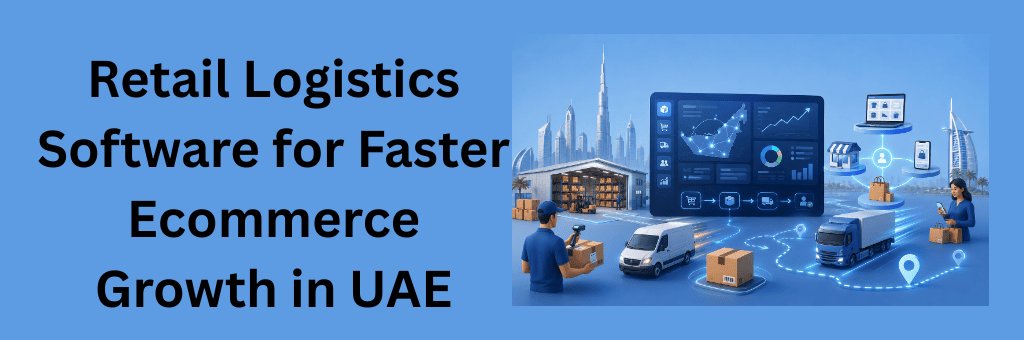
Online stores now compete on speed, accuracy, and delivery trust. Therefore, retail logistics software has become essential for modern commerce. It connects orders, inventory, couriers, warehouses, and customer updates. A modern ecommerce logistics platform also helps retailers manage online orders from one connected dashboard. A strong platform also supports software logistics ecommerce for growing digital stores. Moreover, retail shipping software helps teams ship orders faster. It reduces manual steps and avoids repeated data entry. With retail logistics tracking, managers see each order journey clearly. As a result, teams catch delays before customers complain. Retail logistics software also improves stock movement across stores and warehouses. Because of that visibility, brands plan deliveries with better control. This guide explains features, benefits, and smart selection tips.
Retail logistics now moves faster than traditional operations. Shoppers now want instant order updates, faster dispatch, and clear delivery information. However, manual spreadsheets cannot support this speed.
That is why businesses use connected systems for order movement. These tools align online orders, stock levels, delivery partners, and customer alerts. As a result, teams reduce confusion during peak sales.
A modern logistics setup also improves cost control. Managers compare courier rates, delivery zones, and order volume. Then, they choose smarter shipping options. Therefore, brands save time and protect profit margins.
Retail logistics software helps retailers manage order movement from warehouse to customer. It covers stock picking, packing, courier assignment, tracking, and delivery updates. Because everything connects, teams work with fewer errors.
This software also improves communication between sales channels and warehouses. For example, ecommerce websites, marketplaces, and store orders can sync together. Consequently, teams avoid overselling and missed shipments.
A useful system gives managers real-time order status. It shows pending, packed, shipped, delivered, returned, or failed deliveries. Therefore, teams solve problems before they grow.
Software logistics ecommerce supports digital retail operations with organized order workflows. It helps online brands control product movement across different sales channels. Moreover, it supports better planning during campaigns and seasonal peaks.
Growing ecommerce stores need fast order processing. However, fast processing needs accurate inventory and courier coordination. This software connects both areas in one workflow.
It also helps customer service teams answer delivery questions quickly. Instead of checking many systems, agents view order progress instantly. As a result, customers receive clear and confident updates.
For international or multilingual markets, software logistics ecommerce also improves operational clarity. Teams can track different couriers, zones, taxes, and delivery rules.
Retail shipping software automates key shipping tasks for ecommerce teams. It generates shipping labels, assigns couriers, and updates tracking numbers. With courier management software, teams can control courier selection, delivery zones, and shipment updates more easily. Therefore, staff spend less time on manual work.
This system also compares delivery options. It can select couriers by price, delivery time, zone, or service level. Because of that, businesses reduce shipping costs and improve delivery speed.
Automation also reduces wrong courier entries and missing labels. In addition, teams can process bulk orders during high-volume periods. With automated order fulfillment, brands ship more orders without adding extra pressure.
For multi-location retailers, retail shipping software supports better routing. It can choose the nearest warehouse or store. As a result, deliveries become faster and cheaper.
Retail logistics tracking gives teams full visibility over the delivery journey. It shows where each order is and what action comes next. Therefore, managers can act faster when delays appear.
Useful tracking systems include these features:
These features improve accountability across operations. Also, they help ecommerce teams measure courier performance. Consequently, brands can remove weak delivery partners faster.
Delivery delays usually happen because of poor coordination. Orders may wait for picking, packing, courier booking, or stock confirmation. However, smart systems reduce these gaps.
Retail logistics software improves planning with live order and inventory data. Teams can prioritize urgent orders and avoid late dispatches. Moreover, managers can check courier performance through reports.
Shipping costs also drop with better courier selection. The system can suggest cheaper or faster delivery options. Therefore, businesses protect margins without hurting service quality.
Better visibility also reduces failed deliveries. Customers get timely tracking updates and delivery notifications. As a result, support calls decrease and satisfaction improves.
Modern retailers need clear stock visibility across warehouses, stores, and channels. Without it, teams risk overselling products or delaying orders. Therefore, logistics tools must connect with inventory systems.
A connected platform shows available stock, reserved stock, and dispatched stock. It also helps teams identify slow-moving products. Because of that, managers plan replenishment with more confidence.
Warehouse teams also benefit from clear picking and packing workflows. They know what to prepare, where to find it, and when to ship it. Consequently, order accuracy improves across daily operations.
A strong warehouse visibility software setup helps managers track stock movement across stores, storage areas, and fulfillment locations.

Ginkgo Retail helps growing businesses manage ecommerce, retail, inventory, and logistics workflows more efficiently. Its connected approach supports better order control, warehouse visibility, and delivery coordination.
The platform can support companies that need organized retail operations across channels. It helps teams reduce manual gaps and improve fulfillment speed. Moreover, it gives managers better visibility into daily performance.
For brands scaling online, Ginkgo Retail can simplify order movement from sale to shipment. It supports better customer service because teams can access clearer order information. Therefore, businesses gain stronger control over logistics growth.
Fast delivery needs more than couriers. It needs connected systems, clear stock visibility, and smooth order workflows. Therefore, retail logistics software helps ecommerce brands improve speed, accuracy, and customer trust.
The right platform can reduce delays, automate shipping, and track deliveries in real time. It also supports multi-channel growth and smarter warehouse control. For growing retail businesses, Ginkgo Retail offers a practical path toward stronger logistics management.
FAQs:
What is retail logistics software?
It connects orders, inventory, shipping, and tracking to improve supply chain efficiency.
How does software logistics ecommerce help retailers?
It manages orders, stock, couriers, and deliveries from one system.
Why use retail shipping software?
It automates labels, courier selection, and tracking for faster fulfillment.
What features does retail logistics tracking include?
It includes courier tracking, delivery alerts, returns, and performance dashboards.
How does retail logistics software reduce costs?
It improves delivery planning and helps businesses select cost-effective couriers.
Which ecommerce logistics software is best?
The best solution supports inventory sync, automation, warehouses, and multiple sales channels.
How does retail shipping software automate courier management?
It automates courier assignment, labels, tracking numbers, and customer notifications.
Can it support multi-channel ecommerce?
Yes, it manages fulfillment across websites, marketplaces, social channels, and stores.

CEO & Founder Ginkgo Retail & Comverse | Serial Entrepreneur | Award-Winning SaaS Innovator | E-commerce Veteran | Team Builder | Building AI-driven E-commerce Solutions. He has diverse experience of 10+ years in versatile domains of e-commerce, logistics and tech-oriented business. His eminent role in ecommerce management empowered him to benefit the industry with his knowledge, vision and experience.
Digital Wallet