
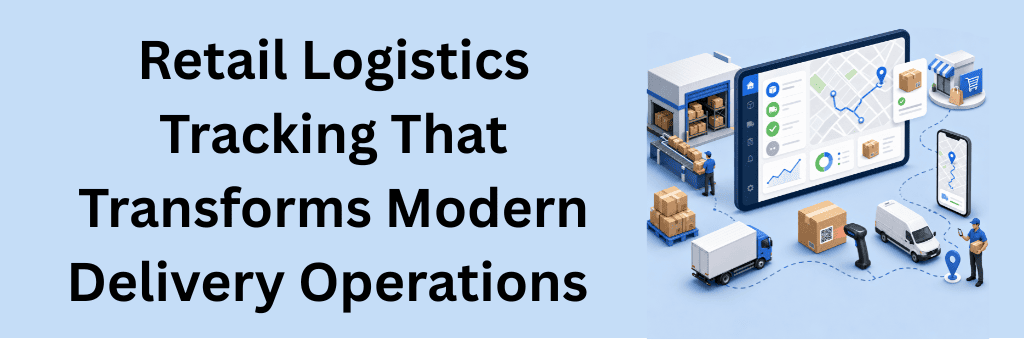
Modern retailers manage orders across websites, stores, warehouses, and online marketplaces. Therefore, retail logistics tracking has become essential for daily operations. It provides accurate logistics visibility across every delivery stage. Moreover, order tracking software helps teams follow orders without manual updates. Retailers can check stock movement, courier activity, and delivery progress quickly. As a result, delivery tracking reduces confusion and prevents avoidable delays. Strong shipment monitoring also supports faster customer communication. Meanwhile, connected systems improve ecommerce fulfillment across multiple sales channels. Businesses can identify delivery problems before customers raise complaints. Consequently, better tracking creates smoother operations and stronger customer trust.
Retail logistics tracking monitors products from warehouses to final delivery locations. It connects inventory, orders, carriers, and customer information. Therefore, retailers gain a complete view of every shipment.
The system records each important delivery event. For example, it records packing, dispatch, transit, and delivery updates. Additionally, managers can identify delayed or missing shipments quickly.
This process supports both physical stores and ecommerce businesses. Moreover, it improves coordination between warehouse teams and delivery partners. Reliable tracking also helps businesses meet promised delivery times.
Without accurate tracking, teams often depend on separate spreadsheets. However, disconnected records create mistakes and slow down customer support. A connected platform solves these issues through real-time information.
A retail logistics tracking platform collects data from several business systems. First, it receives order details from stores or marketplaces. Next, it checks stock availability within connected warehouses.
The system then sends approved orders for packing. Afterward, it assigns shipments to suitable delivery partners. Each delivery update returns to the central tracking dashboard.
Additionally, barcode scanning improves accuracy during warehouse movements. GPS services may also provide live courier locations. Therefore, teams can monitor every important step.
Modern retail technology connects tracking with ecommerce order management tools. This connection helps retailers manage online and offline orders together.
Furthermore, system integrations can connect Amazon, Shopify, Daraz, and other platforms. Consequently, retailers avoid switching between multiple dashboards.
Strong logistics visibility gives retailers greater control over complex delivery operations. Moreover, it provides clear insights into courier performance and order delays.
Retailers gain several important benefits:
Additionally, real-time information helps managers make faster decisions. Teams can change courier routes or shipment priorities quickly.
Accurate tracking also improves supply chain management. For instance, businesses can compare courier costs and delivery success rates. Therefore, they can select stronger logistics partners.
Meanwhile, performance reports reveal repeated delivery issues. Retailers can then fix operational gaps before they affect future orders.
Order tracking software monitors orders from confirmation through final delivery. It gives teams and customers clear status information.
The software usually connects with ecommerce platforms, warehouses, and couriers. Therefore, information flows between each system automatically.
Customers can receive updates through email, SMS, WhatsApp, or tracking pages. Moreover, support teams can view the same information instantly.
This shared view reduces unnecessary customer questions. It also prevents teams from providing conflicting delivery information.
For ecommerce businesses, tracking tools strengthen ecommerce fulfillment processes. They connect payment confirmation, stock allocation, packing, and shipping updates.
Additionally, automated notifications keep customers informed without manual effort. Consequently, staff can focus on urgent delivery problems.
Retailers should choose software that supports current and future business needs. However, basic tracking alone may not provide enough value.
The right platform should include these features:
Furthermore, the system should support retail inventory management. Inventory updates should occur after every confirmed order.
Secure integrations also protect customer and payment information. Meanwhile, flexible reporting helps managers evaluate delivery trends.
The platform should remain simple for daily users. Complex screens can reduce adoption and create further mistakes.
Retailers can improve delivery speed through better data coordination. Initially, the software detects bottlenecks within picking and packing operations.
Managers can then assign more staff during busy periods. Likewise, automated alerts can highlight delayed courier collections.
Accurate delivery tracking also improves route planning. Logistics teams can select nearby warehouses for faster dispatch.
Furthermore, connected inventory records prevent orders from reaching empty locations. The system can redirect orders toward available stock.
This approach supports smarter retail inventory management. It also reduces unnecessary stock transfers between warehouses.
Meanwhile, real-time courier updates improve last-mile delivery planning. Therefore, retailers can respond quickly when delivery attempts fail.
Better coordination shortens processing times. As a result, customers receive orders faster and face fewer surprises.
Modern customers expect clear and timely delivery information. Therefore, order tracking software plays a major customer service role.
Automated messages confirm every important order stage. Customers know when teams pack, dispatch, and deliver their purchases.
Moreover, branded tracking pages create a consistent shopping journey. Retailers can show support details and delivery instructions there.
Reliable information also reduces delivery anxiety. Customers no longer need to contact support for basic updates.
When delays occur, proactive notifications protect customer trust. Businesses can explain the situation before complaints arise.
Additionally, accurate estimated delivery dates improve customer planning. Consequently, shoppers feel more confident about future purchases.
Strong shipment monitoring can also support returns. Customers can follow returned products until warehouses receive them.
Effective retail logistics tracking does more than improve delivery visibility. It also helps businesses reduce unnecessary operational costs. For example, real-time shipment updates prevent duplicate dispatches and reduce manual follow-ups. As a result, warehouse teams spend less time resolving avoidable delivery issues.
Moreover, accurate tracking allows retailers to compare courier performance across different regions. Therefore, businesses can select reliable logistics partners based on delivery speed and success rates. Meanwhile, automated alerts reduce the need for manual monitoring. Consequently, managers can focus on improving overall supply chain performance instead of handling routine tracking tasks.
As retail businesses expand, retail logistics tracking becomes even more valuable. It helps organizations manage increasing order volumes without losing visibility across warehouses, stores, and online marketplaces. Additionally, connected tracking systems support faster decision-making through real-time operational data.
Furthermore, retailers can introduce new sales channels without creating disconnected logistics processes. Therefore, teams maintain consistent delivery performance even during rapid business growth. In the long term, retail logistics tracking creates a scalable foundation for efficient fulfillment, stronger customer satisfaction, and sustainable retail success.
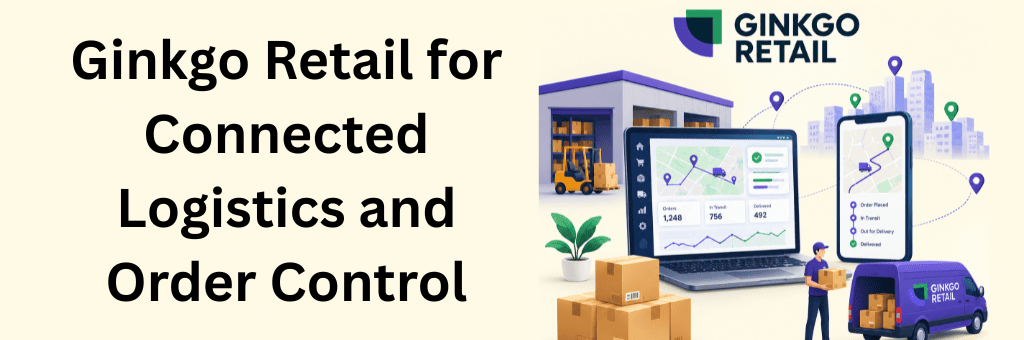
Ginkgo Retail supports retailers through integrated commerce and operational tools. The platform connects sales, inventory, orders, and logistics information.
Therefore, teams gain stronger visibility across daily retail processes. Managers can review fulfillment progress from one connected environment.
Ginkgo Retail also supports ecommerce order management across multiple channels. The integrated system minimizes repetitive tasks while preventing duplicate order entries.
Moreover, businesses can connect retail inventory management with order processing. Stock records can remain accurate after every transaction.
Connected analytics also reveal fulfillment delays and performance trends. Consequently, retail leaders can improve planning and resource allocation.
The solution supports scalable operations for growing retail businesses. It can help teams manage stores, warehouses, and ecommerce channels effectively.
Retail growth requires more than selling products across multiple channels. Businesses must also deliver every order accurately and quickly.
Therefore, retail logistics tracking provides a strong operational foundation. It connects warehouse activity with courier and customer information.
Likewise, order tracking software creates transparency throughout the delivery journey. Teams can resolve problems before they damage customer relationships.
Reliable logistics visibility also improves planning and accountability. Managers can measure costs, delivery performance, and fulfillment efficiency.
Furthermore, integrated supply chain management helps retailers respond to market changes. Businesses can scale order volumes without losing operational control.
Ginkgo Retail brings sales, inventory, and fulfillment information together. As a result, retailers can create reliable delivery experiences and sustainable growth.
Retail logistics tracking monitors products from order placement through final delivery. It provides updates about packing, shipping, transit, and delivery status.
Ginkgo Retail connects orders, stock, and fulfillment information. Therefore, teams can review logistics progress through a connected business environment.
It improves delivery control and reduces operational uncertainty. Moreover, it helps teams identify delays before they affect customers.
Ginkgo Retail can support stores, warehouses, marketplaces, and ecommerce operations.It unifies essential retail data to support smoother operations across different business functions.
Ginkgo Retail centralizes orders from connected sales channels. Consequently, teams can process orders without managing separate records.
Order tracking software should offer live updates, courier integrations, alerts, reports, and branded tracking pages.
Retailers should consider Ginkgo Retail when order volumes become difficult to manage. It also supports businesses expanding across multiple channels.
Retail managers, warehouse teams, ecommerce teams, and customer service staff can use Ginkgo Retail. Each team receives relevant operational information.

CEO & Founder Ginkgo Retail & Comverse | Serial Entrepreneur | Award-Winning SaaS Innovator | E-commerce Veteran | Team Builder | Building AI-driven E-commerce Solutions. He has diverse experience of 10+ years in versatile domains of e-commerce, logistics and tech-oriented business. His eminent role in ecommerce management empowered him to benefit the industry with his knowledge, vision and experience.
Digital Wallet