
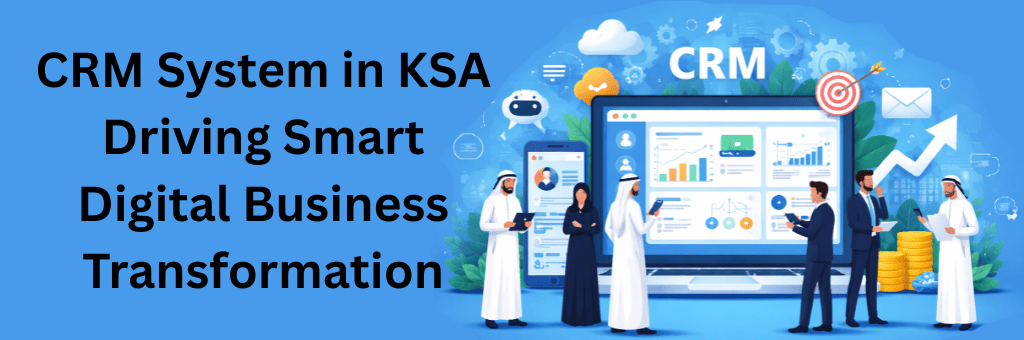
Why a CRM System in KSA Matters Today
A CRM system in KSA supports rapid business modernization.
Saudi organizations now compete in data-driven markets.
A CRM system in KSA centralizes interactions and improves responsiveness.
It strengthens customer relationship management in KSA across departments.
Companies rely on CRM software KSA to organize operations.
Customer insights stay accessible.
Decisions become faster.
CRM also aligns with Saudi enterprise systems for consistency.
This approach supports growth and compliance.
As markets evolve, CRM becomes essential infrastructure.
A CRM system in KSA improves customer engagement.
Sales teams track conversations easily.
Support teams resolve issues faster.
Marketing teams personalize outreach effectively.
CRM strengthens customer relationship management in KSA strategies.
Customer histories remain visible.
Trust builds over time.
Retention rates improve naturally.
CRM platforms act as reliable customer data platforms.
They unify customer touchpoints.
This structure increases long-term value.
A CRM system in KSA accelerates business automation.
Manual work slows productivity.
Automation removes delays.
CRM automates follow-ups and task assignments.
Saudi firms deploy CRM within enterprise automation tools.
Workflows stay consistent.
Errors reduce significantly.
Operations teams gain clarity.
This automation allows teams to focus on strategy.
Efficiency improves across departments.
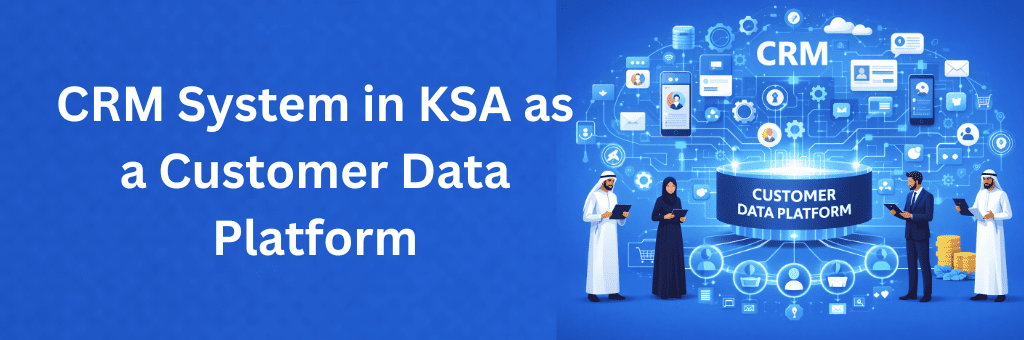
A CRM system in KSA works as a unified customer data platform.
Customer records stay centralized.
Data duplication disappears.
Visibility improves instantly.
CRM enhances customer data management practices.
Profiles include behavior and interaction history.
Insights become actionable.
Saudi companies rely on CRM as trusted Saudi business software.
Customer understanding deepens across channels.
Modern customer platforms connect sales activities with real-time stock visibility. Businesses often integrate these systems with an inventory management system in Riyadh to ensure product availability remains accurate across channels. As inventory data updates automatically, teams avoid overselling and reduce operational confusion. This integration also supports smoother coordination between sales teams and warehouse operations. Many organizations further connect their systems with warehouse management system in Dammam platforms to streamline picking, packing, and shipment workflows. As a result, order fulfillment becomes faster and more predictable. Customers receive timely updates on order status and delivery progress, which improves trust and transparency. Over time, these connected operations strengthen reliability across the entire supply chain and support consistent customer satisfaction.
Efficient logistics has become essential for modern businesses. Therefore, organizations increasingly rely on connected platforms to coordinate sales, storage, and delivery activities. When customer platforms integrate with warehouse and logistics systems, operational visibility improves significantly. As a result, teams gain clearer insights into order status, stock movement, and shipment progress.
Moreover, integration with warehouse management systems, inventory tracking tools, and supply chain analytics helps companies manage stock more accurately. These connected technologies allow warehouses to optimize picking routes, reduce manual handling, and prevent fulfillment errors. Consequently, delivery timelines become more reliable and operational delays decrease.
In addition, businesses can combine logistics operations with real-time reporting, digital dashboards, and predictive inventory analytics. This capability enables managers to monitor warehouse performance, track shipping efficiency, and identify supply chain bottlenecks. Furthermore, automated alerts help teams respond quickly when stock shortages or shipment disruptions occur.
Ultimately, stronger coordination between logistics networks, warehouse operations, and customer service systems creates a smoother fulfillment cycle. Customers receive faster deliveries, businesses reduce operational risk, and supply chain performance becomes far more predictable.
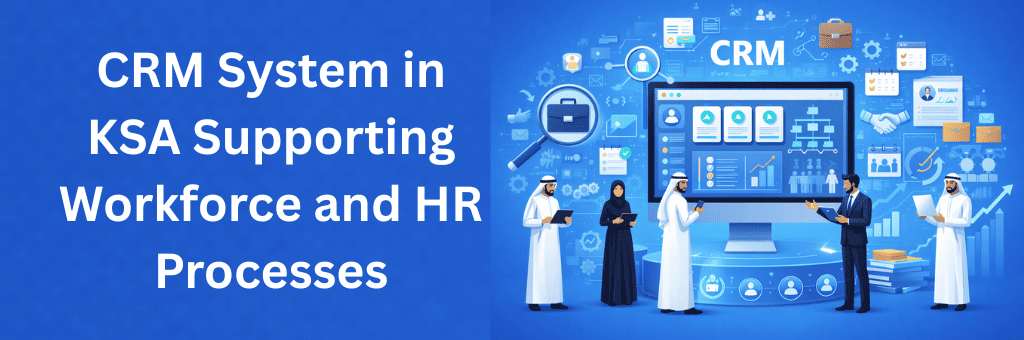
A CRM system in KSA assists internal workforce operations.
Many organizations integrate CRM with an applicant tracking system in Saudi Arabia.
Candidate data stays organized.
Hiring cycles shorten.
CRM also connects with learning management system in Jeddah platforms.
Training progress stays visible.
Skill development improves.
Workforce efficiency strengthens across departments.
A CRM system in KSA supports secure mobile operations.
Integration with mobile device management in Medina protects data.
Field teams access CRM safely.
Devices remain compliant.
Security policies stay enforced.
Customer data remains protected.
This approach supports modern remote workflows.
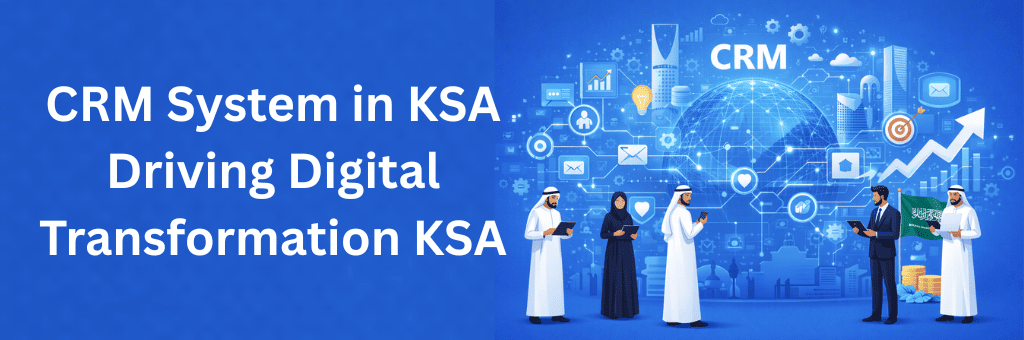
A CRM system in KSA accelerates digital transformation KSA initiatives.
Legacy systems limit growth.
CRM replaces fragmented tools.
Saudi organizations modernize operations through CRM adoption.
Processes become connected.
Data silos disappear.
CRM improves sales pipeline optimization accuracy.
Forecasting becomes reliable.
Growth planning improves significantly.
Modern customer platforms strengthen governance and compliance across organizations. Companies often integrate these systems with a document management system in Saudi Arabia so records remain traceable and securely stored. As a result, audits become faster and more transparent. Integration with contract lifecycle management in Riyadh also keeps agreements organized and accessible. Renewal schedules remain visible, deadlines are easier to track, and risk exposure decreases. Stronger process control ultimately supports better enterprise oversight and operational discipline.
Modern platforms enhance asset tracking across growing organizations. Integration with an asset management system in Dammam improves operational visibility and keeps usage data accurate. Maintenance planning becomes more predictable as equipment data remains centralized. These systems also align smoothly with enterprise resource planning in Jeddah, allowing financial information to stay synchronized across departments. Reporting accuracy improves significantly, giving leadership clearer insights for strategic decisions.
Ginkgo Retail delivers intelligent CRM-driven solutions.
The platform supports unified operations.
It connects CRM with inventory, finance, and warehouse systems.
Insights remain real-time.
Security stays enterprise-grade.
Scalability supports long-term growth.
Saudi organizations gain control with flexibility.
A CRM system in KSA unifies customers, data, and operations.
It supports automation, compliance, and scalability.
Integration strengthens enterprise performance.
Customer trust increases steadily.
With solutions like Ginkgo Retail, Saudi businesses build future-ready ecosystems.

CEO & Founder Ginkgo Retail & Comverse | Serial Entrepreneur | Award-Winning SaaS Innovator | E-commerce Veteran | Team Builder | Building AI-driven E-commerce Solutions. He has diverse experience of 10+ years in versatile domains of e-commerce, logistics and tech-oriented business. His eminent role in ecommerce management empowered him to benefit the industry with his knowledge, vision and experience.
Digital Wallet