
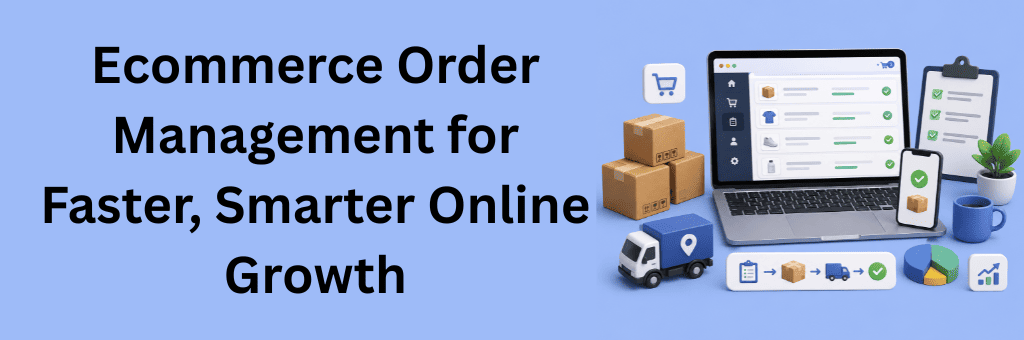
Modern sellers receive orders from websites, marketplaces, stores, and social channels. Therefore, ecommerce order management creates one reliable process for every purchase. It connects payments, stock, packing, shipping, returns, and customer updates. Meanwhile, order fulfillment software speeds warehouse tasks and reduces manual mistakes. An omnichannel ecommerce platform also keeps every sales channel connected. As a result, teams gain control over rising order volumes. Clear workflows improve speed, accuracy, and customer trust. Moreover, order processing automation removes repetitive work from busy teams. Managers can track orders without switching between disconnected systems. Buyers also receive timely updates throughout the delivery journey. Consequently, organized order control supports profitable and scalable online growth.
Ecommerce order management guides purchases from checkout through final delivery. First, the system captures order details from every connected channel. Next, it confirms payment and checks available stock. Then, it sends each order toward picking and packing.
A central dashboard displays status, delivery progress, cancellations, and returns. Therefore, teams can solve delays before customers raise complaints. Strong tools also manage exchanges, refunds, and partial shipments.
Digital order control improves visibility across complex ecommerce operations. Furthermore, managers can measure processing time and staff performance. These insights expose bottlenecks and support better service decisions.
Order fulfillment software manages warehouse tasks after checkout. It guides picking, packing, labeling, dispatch, and courier handover. Therefore, teams complete more orders within shorter periods.
Key delivery features include:
Moreover, automated fulfillment workflows reduce approvals and repeated data entry. Faster handovers help couriers collect parcels on schedule. As a result, customers receive purchases sooner.
Manual handling often causes wrong items, addresses, or quantities. However, order fulfillment software adds checks throughout fulfillment. Barcode scanning confirms each product against the original order.
Address validation identifies missing or unusual delivery details. At the same time, automatic label generation eliminates manual entry errors before shipment. These controls improve shipping accuracy across busy warehouses.
Exception alerts highlight damaged, missing, or unavailable products. Consequently, staff can correct issues before dispatch. Improved accuracy reduces costly returns and strengthens customer trust.
An omnichannel ecommerce platform connects websites, stores, and marketplaces. It gives every channel consistent product and stock information. Therefore, sellers avoid fragmented processes during expansion.
The system supports multi-channel fulfillment through shared queues and routing rules. Customers may buy online and collect from nearby stores. Others may return marketplace orders at physical locations.
Moreover, centralized sales channel management gives managers one operational view. Teams can compare channel performance without preparing separate reports. This structure supports faster decisions and simpler growth.
A strong solution should support every order stage. However, companies must match features with their operating model.
Important features include:
Additionally, reliable online order processing tools should connect existing systems. Useful integrations include accounting, CRM, warehouse, and marketplace applications. Flexible APIs also support future channels and custom workflows.
Inventory software tracks stock quantities, locations, and replenishment. In contrast, order fulfillment software manages tasks required for customer shipments.
Inventory tools show where products sit and when stock needs replenishment. Fulfillment tools assign picking, packing, labeling, and dispatch activities. Therefore, both systems solve different operational needs.
Modern ecommerce order management solutions connect both functions. This connection prevents orders against unavailable stock. It also strengthens planning across warehouses, stores, and online channels.
Customers expect quick delivery, accurate parcels, and clear communication. Consequently, ecommerce order management shapes the complete buying experience.
Automatic confirmations reassure buyers after checkout. Live updates explain packing, dispatch, and delivery progress. Moreover, self-service customer order tracking reduces support requests.
Accurate fulfillment lowers frustrating returns and replacement delays. When problems occur, support teams can view complete order histories. Therefore, they can provide faster and informed solutions.
Reliable service encourages repeat purchases and stronger loyalty. It also protects brand reputation across marketplaces and review platforms.

Ginkgo Retail connects orders, inventory, fulfillment, and channel data within one solution. Its ecommerce order management capabilities improve visibility across every active channel.
Teams can structure order capture, processing, dispatch, and returns. Meanwhile, its omnichannel ecommerce platform supports coordinated selling across stores and marketplaces.
Ginkgo Retail also standardizes order processing automation during expansion. Therefore, growing sellers can handle volume without creating disconnected manual processes.
Effective ecommerce order management creates faster and more reliable order journeys. It combines channel visibility with disciplined fulfillment and customer communication.
Moreover, order fulfillment software improves warehouse speed and reduces shipping mistakes. An omnichannel ecommerce platform keeps channels aligned during growth.
Ginkgo Retail brings these capabilities together through connected retail workflows. As a result, online businesses can scale while protecting service quality.
It controls orders from checkout through delivery. The system connects payments, fulfillment, shipping, returns, and customer updates.
Ginkgo Retail organizes routing, warehouse processing, and dispatch workflows. Therefore, teams reduce delays and complete orders faster.
It connects orders, stock, customers, and sales channels. Businesses gain consistent control across online and offline selling.
Ginkgo Retail provides clearer status visibility and connected customer updates. Consequently, buyers receive faster answers and reliable delivery information.
Ginkgo Retail supports structured picking, packing, and dispatch controls. Moreover, connected data helps teams avoid incorrect shipment details.
Ginkgo Retail supports synchronization, channel control, routing, tracking, returns, reporting, and integrations. These features strengthen scalable selling.
Inventory software tracks stock and replenishment. In contrast, fulfillment software manages picking, packing, shipping, and delivery tasks.
Ginkgo Retail suits sellers seeking connected order, inventory, fulfillment, and channel control. Its scalable workflows support long-term expansion.

CEO & Founder Ginkgo Retail & Comverse | Serial Entrepreneur | Award-Winning SaaS Innovator | E-commerce Veteran | Team Builder | Building AI-driven E-commerce Solutions. He has diverse experience of 10+ years in versatile domains of e-commerce, logistics and tech-oriented business. His eminent role in ecommerce management empowered him to benefit the industry with his knowledge, vision and experience.
Digital Wallet